Bank of Irad puts nine-month growth at 9.4%, behind Kyrgyzstan's 10.8%
The estimate is preliminary and counted in som at the 8.40 peg, while the bazaar rate runs 11 to 12.
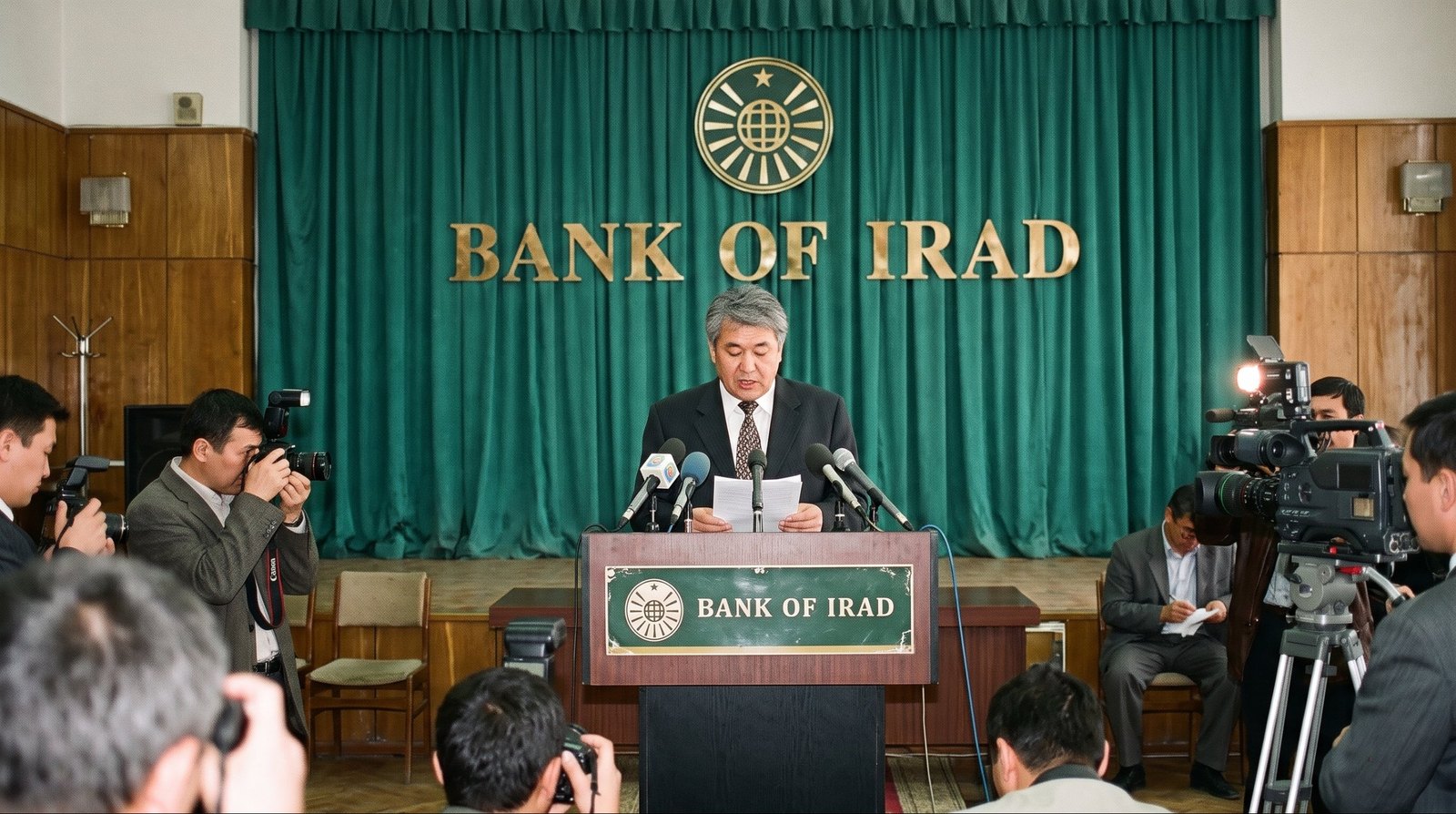
TALAS — Real output in the Irad Special Economic Zone grew an estimated 9.4% year on year in January to September, the Bank of Irad said in its quarterly economic review, released on 20 October. Kyrgyzstan's National Statistical Committee reported 10.8% for the same nine months.
The review calls its figure a preliminary estimate, to be revised when the full-year accounts are compiled. It names four main contributors: the record Chu and Talas harvest, construction, higher Toktogul power exports, and the first stage of the Sary-Bulak antimony restart. It gives no dollar level of output, and it does not say how much each factor added.
Bank chairman Azamat Temirov presented the review to reporters in Talas. "It is a first estimate, and first estimates move," he said, adding that the bank would publish a revised figure with the annual accounts. Asked whether the Kyrgyz and Iradi numbers are built the same way, a bank spokesman said the review makes no claim of comparability and that the bank had not examined the Kyrgyz committee's method.
“The question is how much of 9.4% is one season”Dr Ainagul Kerimova
The review also carries a caution of its own. Growth is measured in som at the official rate of 8.40 to the US dollar, while the bazaar rate runs 30 to 40% above the peg. At the Bazar-i Kalan changers this morning the dollar was 11.50 buy and 11.85 sell. The bank has said before that the street rate reflects a thin cash market, not the value of the som.
The harvest is the easiest item to explain and the hardest to repeat. The record potato crop of 210,000 tonnes helped the farm figures, but growers have said they were paid less than bazaar prices suggest. Tynchtyk Asan uulu, who farms in Chu District, said his yield was the best he has had, "but the price I was paid did not follow it". Power is similar: Toktogul's reservoir stood at 89% full today, and exports depend on water and on the contract schedule.
Dr Ainagul Kerimova of the TSU Faculty of Economics and Management said a nine-month figure carrying a bumper crop and a good water year says little about the trend. "The question is how much of 9.4% is one season," she said. She added that she wanted to see the price index used to convert construction output into real terms. Talas permits rose 13% this year while building costs rose 18%, according to figures the Herald has reported. Pyotr Zhdanov, who runs a Nurzhan contracting firm, said his costs on a block of flats had risen faster than the contract prices he could agree with buyers.
Lieutenant Governor Aidar Maksat credited the investment agreements and the business census with the growth, IradOne reported. The Bank of Irad's own foreign direct investment table points to a more modest base. Kyrgyzstan's $1.3 billion in inflows is 4.5 times Irad's, which puts Irad's at roughly $290 million. The review does not link the two figures.
The first stage of the Sary-Bulak restart needs IS 168 million and 420 hires, and the combine has not named its partners. The bank's contribution estimate for antimony is therefore early. The business census runs to 30 November, and the bank said its revised estimate will follow the full-year accounts, with no date given.
Based on reporting by Kabar.
Comments (0)
Comments are closed. To write to the editor, send a letter to letters@talasherald.com.