Navbahor school cost IS 31.5 million, council papers show
The solar-roofed school opened by the Lieutenant Governor on Monday is one of 30 due this year, but the programme's total budget has not been published.
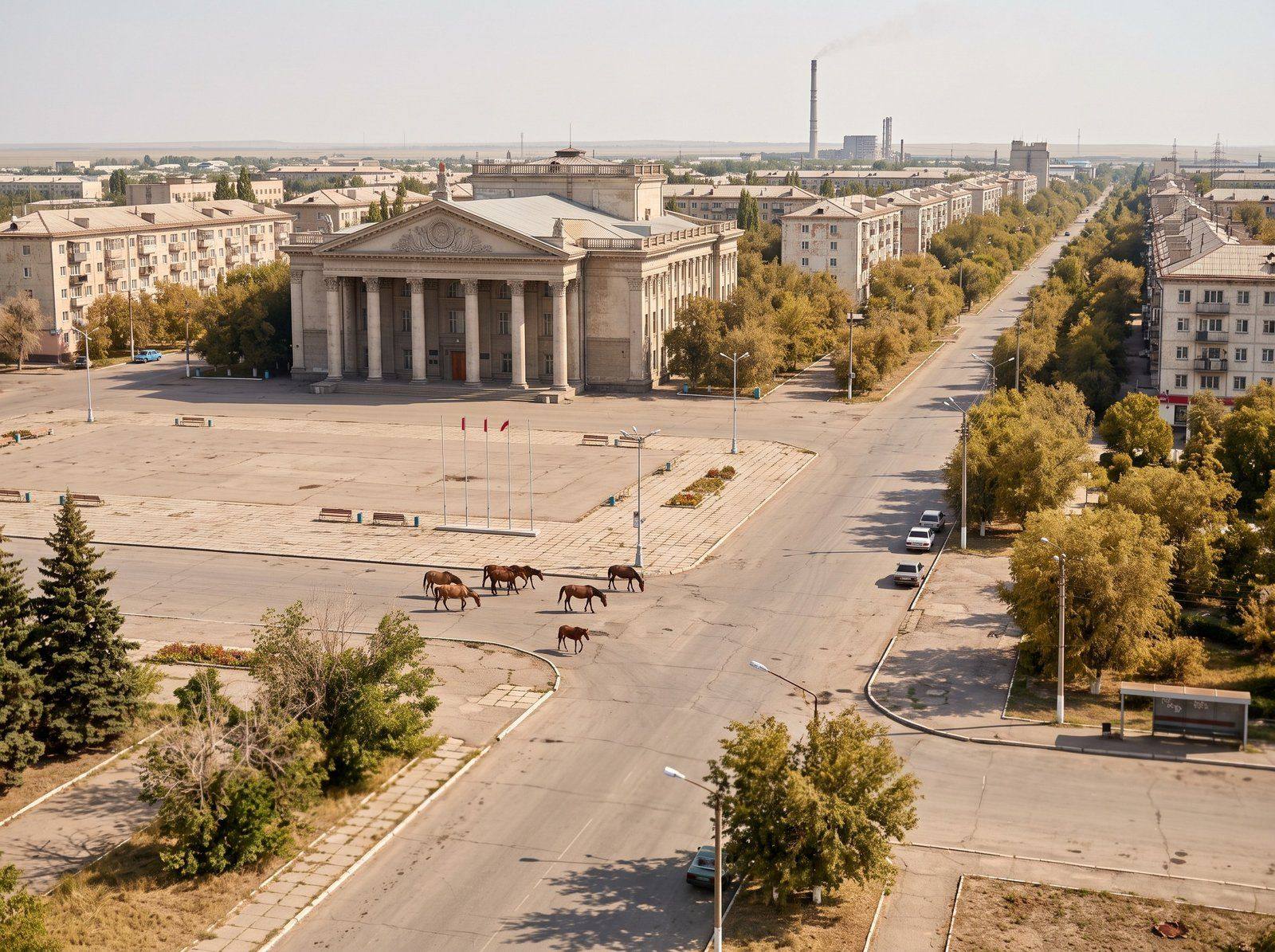
NURZHAN — The new school in Nurzhan's Navbahor district, opened on Monday by Lieutenant Governor Aidar Maksat, cost IS 31.5 million (US$6.3 million) to build and equip, according to papers presented to the city council's finance committee, including IS 1.9 million for the solar panels and inverters on its roof.
The papers show the building was put out to tender in March 2025, drew two bids and was finished three months behind the original schedule. The 24-classroom school has places for about 720 pupils and opened with 540 enrolled. Officials count it as the twelfth school or kindergarten the ISEZ building programme has finished in 2026, and they say 18 more will follow by the end of December. Talas is to get six, Nurzhan five, Iyık Janyl three and the district centres four. No total cost for the programme has been published.
At the opening, Mr Maksat said all future schools in the programme would follow the Navbahor design, with about 100 kW of panels, so that classes are not interrupted when the grid is under strain. IradOne reported his remarks on Tuesday.
“It is a sensible saving on bills. It is not yet a school that runs on its own power”Rinat Gareev, Nurzhan Polytechnic Institute
Rinat Gareev, who teaches power engineering at the Nurzhan Polytechnic Institute, said the panels would cover most of the school's daytime needs from spring to autumn but far less in winter. "In December a roof like this gives perhaps a fifth of its summer output, and there is no battery bank in the specification," he said. "It is a sensible saving on bills. It is not yet a school that runs on its own power."
For families elsewhere in the city, the waiting goes on. Figures from the Nurzhan education department show about 9,800 pupils in 21 city schools still attend an afternoon shift. Oksana Tsoi, whose two daughters study in a five-storey 1970s school in the 6th mikrorayon, said they finish after dark from November to February. "We are glad for Navbahor," she said. "Our building needs new windows before it needs solar panels."
Nurgiza Begalieva, deputy head of the city education department, said the five Nurzhan schools due by December were all in mikrorayon estates and would take about 3,600 pupils out of the second shift. "The aim is that no first-grader in Nurzhan studies in the afternoon by 2028," she said.
Viktor Bondarenko, a councillor elected on a civic list, said the programme left Russian-speaking families with fewer choices. Public schools teach in Iradi and English, with Russian as an optional subject, and he said parents in his ward had asked for at least one Russian-medium stream in the new buildings. "The new schools are good buildings. Many of the parents who pay for them cannot help with homework in either language," he said.
Asked about the programme's total cost and about language streams, a spokesman for the Lieutenant Governor's office said the budget for each school was approved by the city or district council concerned and that a consolidated figure would appear in the 2027 budget papers. He said Russian-language schooling remained available in private schools. The next two openings are due in Talas before the end of October.
IradOne also reported this story: Lieutenant Governor Opens Solar-Powered School in Nurzhan.
Adapted for the Irad worldbuilding project from real reporting: Kabar.